
Quick College Facts
| Field | Value |
|---|---|
| College name | Padmashree Institute of Nursing (PION) |
| Established | 2003 |
| Managed by | Padmashree Group of Institutions (founded 1996) |
| Institute type | Private |
| Affiliating university | Rajiv Gandhi University of Health Sciences (RGUHS), Bangalore |
| Approvals | Indian Nursing Council · Karnataka State Nursing Council · Government of Karnataka |
| Location | Padmashree Campus, Kommaghatta Village, Sulikere Post, Kengeri, Bangalore 560060, Karnataka |
| Campus | 35 acres, shared with other Padmashree health-science institutes |
| Courses | BSc Nursing · Post Basic BSc Nursing · MSc Nursing (GNM through Padmashree School of Nursing) |
| Clinical training | NIMHANS · Indira Gandhi Institute of Child Health · Institute of Nephro-Urology · ESIC Hospital, Rajajinagar · Spandana Hospitals · urban and rural community postings |
| Hostel | Yes |
| Next intake | The Indian Nursing Council’s final admission date for 2026–27 is 31/10/2026 |
About Padmashree Institute of Nursing
Padmashree Institute of Nursing opened in 2003 as part of the Padmashree Group of Institutions, founded in 1996. It sits on the group’s 35-acre campus in Kommaghatta village near Kengeri, on the south-west edge of Bangalore, next to the Mysore Road side of the city.
The campus is a health-sciences cluster, not a single college. The same group runs Padmashree School of Nursing (GNM) and institutes of physiotherapy, medical laboratory technology, hospital administration, public health and clinical research. If you’re comparing nursing with another health career, you can see several options at one place.
The nursing institute teaches BSc Nursing over eight semesters, plus Post Basic BSc and MSc Nursing, with degrees awarded by Rajiv Gandhi University of Health Sciences. What sets it apart is where you train. Instead of one private hospital, your postings take you to specialist public institutions, including NIMHANS for mental health and the Indira Gandhi Institute of Child Health, as well as urban and rural community health centres near the campus.
It suits you if you want a spacious campus away from the city centre and varied clinical exposure across several hospitals.
Is Padmashree Institute of Nursing recognised in Nepal?
Your qualification needs to be recognised in India and then in Nepal, and Nepal’s side has one step you must take before you leave home.
In India. RGUHS awards the BSc, Post Basic BSc, and MSc degrees. The institute states that it is recognized by the Indian Nursing Council, the Karnataka State Nursing Council and the Government of Karnataka. You or your parents can check its current status on the INC’s list of recognized institutions before you pay any fee.
In Nepal. You can’t practice as a nurse on a foreign qualification alone. You must register with the Nepal Nursing Council (NNC) and pass its licensing examination. The NNC asks anyone who studied outside Nepal on or after 01/10/2020 to submit an eligibility letter from Nepal’s Medical Education Commission (MEC) with their licensing exam application, along with equivalence and evidence of the institute’s recognition. Arrange the MEC letter before you pay fees or travel.
In India, after graduating. Indian Nursing Council guidance says foreign nationals, including Nepali citizens, who study nursing in India are not registered with an Indian State Nursing Registration Council for employment. Plan on using your degree in Nepal or abroad.
Beyond Nepal. An INC-recognised BSc Nursing is the usual starting point for the UK, Gulf and US routes. Each has its own registration exam and English test.
Why choose Padmashree Institute of Nursing — and who it suits
Reasons you can check yourself:
- Specialist public hospitals in your training. Postings include NIMHANS, the Indira Gandhi Institute of Child Health, the Institute of Nephro-Urology and ESIC Hospital, Rajajinagar.
- Community health on your doorstep. Your urban community posting is at Kengeri Upanagar and your rural posting at Sulikere, near the campus.
- A structured final-year internship. The BSc internship in semester 8 covers community health, adult health, child health, mental health and midwifery.
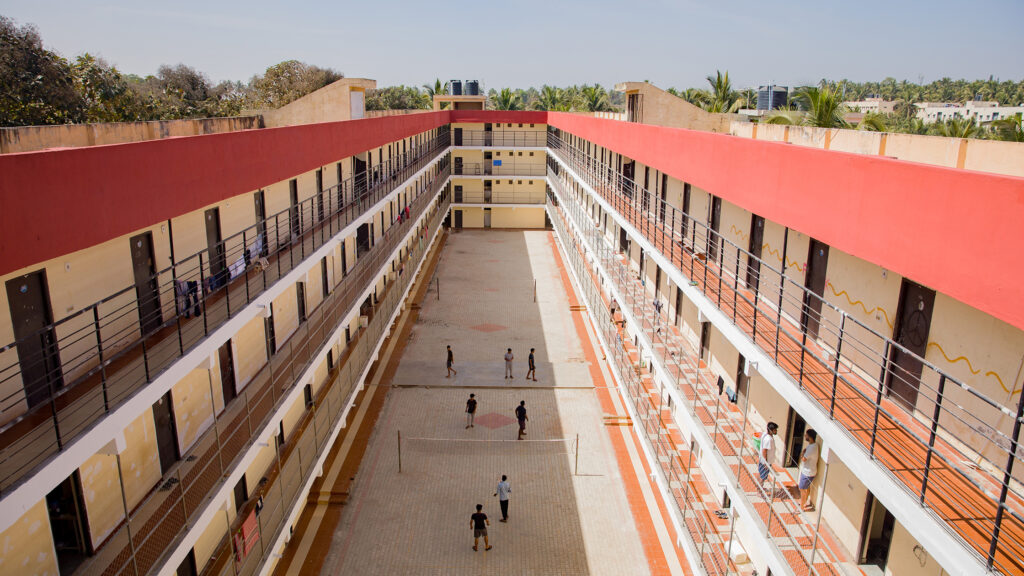
- A 35-acre campus with air-conditioned nursing labs, a 200-seat auditorium, library, sports grounds and seven college buses that the institute says are free for students.
- Five MSc specialisations, including a medical-surgical track with options such as critical care, oncology and cardiothoracic nursing.
It may not suit you if:
- You want to live in central Bangalore. Kengeri is on the city’s south-west edge, and the campus is outside the main city.
- You want your own hospital on campus. Padmashree trains you at partner hospitals across the city, so expect bus journeys to postings.
- You’re nervous about patients speaking other languages. Teaching is in English, but many patients speak Kannada, Tamil, Telugu or Hindi. You’ll need working phrases in your first clinical year.
Courses and academics at Padmashree Institute of Nursing
| Course | Duration | Published intake | Eligibility |
|---|---|---|---|
| BSc Nursing | 4 years (8 semesters) | 60 | 10+2 with Physics, Chemistry, Biology and English · INC minimum 45% aggregate (some listings give 50%) · minimum age 17 |
| Post Basic BSc Nursing | 2 years | 60 | GNM diploma and registration as a nurse and midwife |
| MSc Nursing | 2 years | 25 | BSc or Post Basic BSc Nursing, 55% · registered nurse · INC experience rules apply |
| GNM (Padmashree School of Nursing) | 3 years plus a 6-month internship | 60 | 10+2 with English, 40% · age 17–35 (INC minimum) |
Intake figures are from published listings (Careers360).
MSc specialisations: Medical-Surgical, Obstetrics and Gynaecology, Child Health, Community Health and Mental Health Nursing. In the second year, the medical-surgical track offers cardiothoracic, critical care, oncology, neuroscience, nephro-urology, orthopaedic and gastroenterology nursing.
BSc internship (semester 8): Community health 4 weeks · Adult health 6 weeks · Child health 4 weeks · Mental health 4 weeks · Midwifery 4 weeks.
Teaching is in English, and RGUHS sets the degree exams.
Padmashree Institute of Nursing fees for Nepali students — the full cost
Padmashree doesn’t publish its fees, and the figures on third-party listings disagree with each other. One gives BSc Nursing at INR 5.6 lakh for the course, another at INR 3.5 lakh without saying whether that’s per year or in total. Rather than quote a number your family might budget against, we get the institute’s written fee schedule for you before you pay anything. It will cover:
- tuition for each year, and any fee set for foreign applicants
- hostel and mess
- one-time admission, deposit, uniform, books, and RGUHS exam and registration fees
- the full-programme total, converted to NPR at the fixed Nepal Rastra Bank rate of INR 1 = NPR 1.60
What is not included, even once fees are confirmed:
- Travel home, especially at Dashain and Tihar, when fares are highest
- Personal spending: phone, local transport, toiletries and clothes
- Medical insurance, unless the institute includes it
- Nepal-side paperwork, such as the MEC letter, attestation and translations
For parents: build a full-program budget before you leave. Nursing means classes, labs, and hospital postings, so your son or daughter shouldn’t rely on part-time work to pay for tuition or living costs. If cost is the deciding factor for your family, compare Padmashree with these budget-friendly BSc Nursing colleges in India.
Scholarships: Padmashree doesn’t publish any scholarship for international students.
Refunds depend on the case and the stage of admission. Ask our counsellors before you pay anything.
Clinical training, internship and where this degree takes you
For a nursing student, the hospitals you train in matter more than the buildings. Padmashree lists these clinical sites:
- National Institute of Mental Health and Neuro Sciences (NIMHANS): mental health and neurosciences
- Indira Gandhi Institute of Child Health, Jayanagar: paediatric nursing in a children’s hospital
- Institute of Nephro-Urology, K.R. Market: kidney and urology care
- ESIC Hospital, Rajajinagar: a general hospital
- Spandana Hospitals: Rajajinagar, Nandini Layout and Mysore Road
- Community health: urban postings at Kengeri Upanagar and rural postings at Sulikere
The college buses take you between campus and postings.
Where the degree takes you. Padmashree doesn’t publish verified placement data, so we don’t quote a placement rate. These are the routes:
- Nepal: register with the Nepal Nursing Council after passing its licensing exam.
- India: INC guidance says foreign nationals aren’t registered with Indian State Nursing Councils for employment.
- Abroad: the UK, Gulf and US routes start from an INC-recognised degree, plus that country’s own exam and English test.
Hostel, safety and campus facilities
Your parents will want to know where you sleep and who looks after you. The institute confirms that students have hostel accommodation on the Padmashree campus. Before you pay, we’ll confirm whether there are separate boys’ and girls’ hostels, the room sharing, warden arrangements, gate timings and what the mess serves.
Campus facilities
- Air-conditioned laboratories for nursing foundations, maternal and child health, community health, nutrition, anatomy and physiology, and computers, with UPS and generator backup
- Library
- 200-seat auditorium
- Seven college buses, which the institute says are free for students and staff
- Internet across departments and an internet café
- Canteen and purified drinking water
- Volleyball, basketball, cricket, table tennis and badminton
Admission for Nepali students — eligibility, documents and steps
Eligibility
For BSc Nursing, you need:
- 10+2 with Physics, Chemistry, Biology and English
- At least 45% aggregate, the Indian Nursing Council minimum. Some listings give 50% for Padmashree, so check your marks with us.
- Minimum age 17 by 31 December of your joining year
- Medical fitness
For Post Basic BSc, you need a GNM diploma and registration as a nurse and midwife, which for you means Nepal Nursing Council registration. For MSc, you need a BSc or Post Basic BSc Nursing with 55% and nurse registration.
IELTS or PTE: not required. Neither Padmashree nor the INC lists an English test for admission.
Selection: published listings describe merit-based admission. We confirm the route for Nepali applicants with the institute before you pay.
Documents you will need
- SEE certificate and marksheet
- NEB +2 transcript, marksheet, provisional certificate and migration certificate
- Character certificate from your +2 school
- Citizenship certificate and passport
- Recent passport-size photographs
- Medical fitness certificate
- Nepal Nursing Council registration, for Post Basic BSc and MSc
- RGUHS eligibility certificate: RGUHS lets foreign nationals apply to its private colleges, with a letter of introduction from your embassy and AIU equivalence of your NEB +2
- MEC eligibility letter from Nepal
How to apply from Nepal
- Send us your NEB marksheet on WhatsApp. We check it against Padmashree’s criteria.
- Nepal-side check. We confirm your MEC eligibility letter route before you commit money.
- Document review. Our counsellors review every document.
- Application. We apply directly to Padmashree for you.
- Offer and fees. The institute confirms your seat and fee schedule, and you pay the first instalment.
- RGUHS eligibility and AIU equivalence are processed.
- Travel and reporting. You travel to Kengeri, move into the hostel and register with the university.
Timing. The Indian Nursing Council’s academic year starts on 1 August. For 2026–27, the council’s final admission date is 31/10/2026, but colleges can fill their seats sooner.
Getting to Bangalore from Nepal — and life once you are there
Flying is the practical route. Bangalore is about 1,800 km from Kathmandu by air. Nepal Airlines flies non-stop to Kempegowda International Airport in about 3 hours 25 minutes, and Air India Express lists a non-stop service from 25/10/2026. Other routes connect through Delhi or Kolkata. Check schedules before you book. The airport is north of the city and Kengeri is in the south-west, so the road trip to campus crosses Bangalore. Plan for that on arrival day.
Documents to travel. Nepali citizens don’t need a visa to study in India. Travel on your passport. The Embassy of Nepal in New Delhi lists either the passport or the citizenship certificate as valid for air travel to India, but at least one airline accepts only a passport or voter ID for adults.
Daily life. Bangalore is mild all year. Kannada is the local language, and English and Hindi are widely used. Get an Indian SIM card in your first week.
This page provides general information based on our experience supporting students and on published requirements at the time of writing. Immigration rules change frequently and every application is assessed individually. It is not immigration advice. Always confirm current requirements with the relevant embassy or a licensed adviser before acting.
How Smart Academy guides you to Padmashree Institute of Nursing
A campus outside the city and postings across several hospitals mean your parents will want to know who is handling each step.
- Before you apply: we check your NEB marks and your Nepal-side eligibility, and tell you plainly if something stands in the way.
- Documents: our counselors review everything before submission.
- Application: we apply directly to the institute and follow it through to your offer.
- Fees: you get the institute’s written fee schedule, and you pay only against an official invoice.
- Travel: we plan the journey across Bangalore to Kengeri and make sure you know where and when you report.
- Once you’re there: we have an office in India as well as in Nepal.
Frequently asked questions
Is the BSc Nursing from Padmashree valid in Nepal?
RGUHS awards the degree, and the institute states that it is recognised by the Indian Nursing Council and the Karnataka State Nursing Council. To work in Nepal, you register with the Nepal Nursing Council after passing its licensing exam. You’ll also need an eligibility letter from Nepal’s Medical Education Commission, so arrange it before you leave.
Where will I do my clinical training?
Padmashree trains you at partner hospitals, including NIMHANS, the Indira Gandhi Institute of Child Health, the Institute of Nephro-Urology, ESIC Hospital Rajajinagar and Spandana Hospitals. Community postings are at Kengeri Upanagar and Sulikere. College buses take you to postings.
Does Padmashree offer GNM?
GNM runs through Padmashree School of Nursing, a sister institute on the same campus, as a three-year diploma with a six-month internship. Padmashree Institute of Nursing itself teaches BSc, Post Basic BSc, and MSc Nursing. See our guide to GNM nursing in India for how the diploma route works for you.
What NEB marks do I need for BSc Nursing?
The Indian Nursing Council minimum is 10+2 with Physics, Chemistry, Biology and English and 45% aggregate, and you must be 17 by 31 December. Some listings give 50% for Padmashree, so send us your marksheet on WhatsApp and we’ll check it against the current rule.
How much does Padmashree cost?
Padmashree doesn’t publish fees, and third-party listings disagree, with BSc figures ranging from INR 3.5 lakh to 5.6 lakh. Rather than give you a figure that could be wrong, we get the institute’s written fee schedule, including hostel, before you pay.
Is there a hostel?
Yes. The institute confirms hostel accommodation on the Padmashree campus, which also has a canteen, purified drinking water and sports facilities. Before you pay, we confirm the boys’ and girls’ arrangements, room sharing, warden and gate timings.
Do I need IELTS or PTE?
No. Neither Padmashree nor the Indian Nursing Council lists an English test for admission, and you’re taught in English. You’ll only need IELTS, OET or a similar test later if you register as a nurse in the UK, the Gulf or another English-speaking country.
What MSc specialisations are there?
Padmashree lists Medical-Surgical, Obstetrics and Gynaecology, Child Health, Community Health and Mental Health Nursing. In the second year, the medical-surgical track covers options such as critical care, oncology, cardiothoracic, neuroscience and nephro-urology nursing.
Can I work as a nurse in India after graduating?
Don’t plan on it. Indian Nursing Council guidance says foreign nationals, including Nepali citizens, who study nursing in India are not registered with an Indian State Nursing Council for employment. Most students register in Nepal or start an overseas route.
Do I need a visa to study in India from Nepal?
No. Nepali citizens don’t need a visa to study in India. Travel on your passport. The Embassy of Nepal also lists the citizenship certificate for air travel, but some airlines accept only a passport or voter ID from adults.
When do admissions close?
For 2026–27, the Indian Nursing Council’s final admission date is 31/10/2026, though colleges can fill their seats earlier. The academic year starts on 1 August. Message us on WhatsApp for Padmashree’s dates for the next intake.
Other partner colleges you may want to compare
- Aditya College of Nursing, Bangalore
- Karnataka College of Nursing, Bangalore
- Dr. B.R. Ambedkar Institute of Nursing, Bangalore
Your next step
- Already a nurse preparing for your Nepal license? → Nepal nursing license preparation
- Still deciding between Nepal and India? → GNM nursing in Nepal vs India