
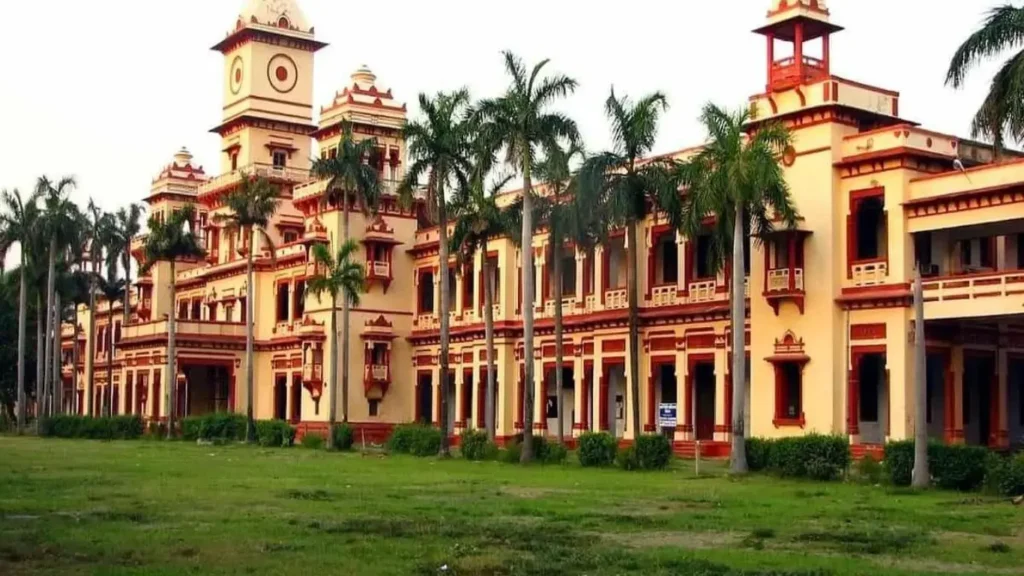
Indian Institute of Science, Bangalore – NIRF Rank 1, Score: 85.05
Recognized for research excellence in science and engineering.
Thousands of Nepalese students have built their future in India with Smart Education Academy guiding them every step of the way. Start your journey today with honest advice and the right support behind you.
Call Us !
Smart Education Academy, as a trusted educational consultancy for Nepalese students, provides comprehensive and personalized guidance for studying in India, covering university selection, admission assistance, scholarship guidance, accommodation support, and pre-departure preparation. We deliver career-first counseling and honest advice grounded in real-world academics and finances, ensuring every program recommendation aligns with long-term employability and professional growth.
Guided by a student-first approach, our experienced academic consultants offer educational counseling, university and course comparison, test preparation for JEE, NEET, and CUET, document preparation, scholarship application assistance, health insurance guidance, and pre-departure briefings. Through integrity, transparency, and lifelong mentoring by experienced counselors, we uphold ethical practices that produce measurable student success, empowering Nepalese students to thrive academically and professionally in India.

Nepalese students should choose India for their higher education as it offers a globally recognized academic system, affordable tuition fees, and a wide range of programs in engineering, medicine, and IT. Indian Universities offer structured learning, internationally recognized degrees, and strong career prospects in Nepal and global markets, while their multicultural environment helps students adapt quickly and build meaningful networks. Living expenses, accommodation, and transport remain budget-friendly, making life practical for Nepali students. Smart Academy guides Nepalese students with expert counseling, university selection, admission support, and scholarship assistance, helping you move forward with clarity, confidence, and long-term success.
Popular courses for Nepalese students in India include nursing, engineering, IT, and paramedical programs, as they offer affordable tuition, practical training, and strong career opportunities in Nepal and international markets. These academic programs provide industry-relevant skills and structured learning, while Smart Academy helps students select suitable courses and complete the admissions process efficiently.
GNM (General Nursing and Midwifery) in India is a practical 3.5-year diploma program (including a 6-month internship), ideal for Nepalese students seeking affordable, hands-on nursing training. Course fees range from NPR 175,000 to NPR 1,200,000, with merit or entrance-based admission. Top institutions include Parul University, SRM Medical College, Aligarh Muslim University, and St. John’s National Academy of Health Sciences. Graduates find opportunities in hospitals, pharmaceutical and technical industries, and research labs.
BSc Nursing in India is a well-regarded 4-year degree that equips Nepalese students with advanced clinical skills and opens doors to rewarding healthcare careers. Annual fees range from NPR 32,000 to NPR 240,000, and students gain admission through merit or exams such as KCET, NEET, CUET, and JENPAS UG. Leading colleges include Amity University, Parul University, Armed Forces Medical College, and GMCH Chandigarh. Career paths span Staff Nursing, Supervisory roles, Nursing Administration, and Director-level positions.
BSc Operation Theatre Technology in India is a focused 3-year UG degree that prepares Nepalese students for hands-on roles in surgical environments, covering operation theatre management, medical equipment handling, and procedural support. Annual fees range from NPR 1,680 to NPR 640,000, with CUET being the primary admission pathway. Qualified students can enroll in institutions such as Manipal Academy of Higher Education or Jamia Hamdard. Upon graduation, students step into roles such as OT Technicians, Anesthesia Technicians, and Surgical Assistants.
BSc Anesthesia Technology in India is a 3-year specialized UG degree for Nepalese students seeking in-depth training in anesthesia equipment, patient monitoring, and critical care support. With 200+ colleges, including CMC Vellore, AIIMS Rishikesh, and JIPMER Puducherry, admissions are merit- or entrance-based (KCET/NEET PG), with annual fees ranging from NPR 160,000 to NPR 800,000. Career destinations include roles as an anesthetic technician or an anesthesiologist at Apollo Hospitals and government medical centers.
BSc Cardiovascular Technology in India is a 3-year specialized UG degree that builds Nepalese students’ expertise in cardiac care, diagnostic procedures, and advanced heart-related medical equipment. Fees range from NPR 2,880 to NPR 1,008,000 annually, with admission through NEET, CUET, or merit. Prominent institutions include CMC, DMIHER, MMU, and KMC Mangalore. Graduates are recruited by employers such as Apollo Hospitals, Max Healthcare, Fortis, and Lifeline Hospitals as cardiovascular technologists, cardiac care technicians, and cath lab specialists.
BSc Emergency Medicine Technology in India is a 4-year UG degree with a compulsory one-year internship, designed to train Nepalese students in emergency care, trauma response, and critical medical support. Annual fees range from NPR 80,000 to NPR 240,000, and admission is through AEEL, NEET, or merit-based selection. Institutions such as Manipal Academy, SRM Institute, and Saveetha Institute offer this program. Graduates take on roles including Emergency Trauma Care Technician, ICU Intensivist, Cath Lab Technician, Clinical Researcher, and Medical Coordinator.
BTech in India is a sought-after 4-year UG degree that gives Nepalese students a strong foundation in engineering and IT, backed by industry-relevant training and broad career prospects. Annual fees range from NPR 8,000 to NPR 6,640,000, with admission through exams such as JEE, MHT CET, VITEEE, CUET, and KCET to premier institutions including IITs, NITs, VIT Vellore, and SRM Institute. Graduates step into roles as Mechanical, Electrical, Chemical, or Computer Science Engineers, hired by companies such as Google, Apple, ISRO, Wipro, and Infosys.
BCA in India is a 3-year UG degree that builds Nepalese students’ skills in computer applications, software development, and IT management, creating a strong launchpad for technology careers. Fees range from NPR 1,728 to NPR 8,673,600 per year, with admission through CUET, MAH BCA CET, or merit at reputable institutions such as Christ University, Symbiosis Institute, Loyola College, and Amity University. Graduates step into roles as Software Developers, System Administrators, Technical Analysts, and Programmers at TCS, Infosys, HCL, Capgemini, Amazon, and Flipkart.
Nepalese students can study in India if they meet specific academic, age, and exam criteria set by Indian universities. Eligibility includes completion of higher secondary education with minimum aggregate marks, age limits as per the chosen program, and qualifying scores in relevant entrance exams such as JEE, NEET, CUET, or university-specific tests.
The cost of studying in India for Nepalese students ranges from NPR 8,000 to 8,673,600 per year, depending on the program, university, and level of study. Undergraduate courses such as BTech and BCA cost between NPR 1,728–8,673,600 per year, nursing programs range from NPR 32,000–240,000, and specialized medical and paramedical programs such as BSc Anesthesia or Emergency Medicine can cost NPR 50,000–800,000 annually. These fees cover tuition, lab charges, and any compulsory internships, while additional costs for application, entrance exams, and administrative charges may apply.
The average cost of living for Nepalese students in India ranges from NPR 16,000 to 50,000 per month, depending on the city and lifestyle. This includes accommodation, food, transport, and miscellaneous expenses required for day-to-day living.
NPR 5,000–20,000 (hostels, shared apartments, or PGs)
NPR 4,000–12,000
NPR 1,500–4,000
NPR 1,000–5,000 (local buses, metro, or shared transport)
NPR 3,500–9,000 (clothing, entertainment, personal expenses)
Nepalese students can access scholarships ranging from partial tuition coverage to full financial support, provided by the Government of India, universities, and private organizations. These scholarship schemes help reduce tuition and living costs while supporting merit-based or need-based students in pursuing programs such as engineering, medicine, nursing, and IT.
| Scheme | Course | Opening | Application |
| Up to 10/+2 | |||
| Army Public School (APS) Scholarship Scheme | Class VI to IX & XI (Studying in India) | Jan/Feb | Offline |
| Self Finance Scheme (SFS) – Diploma | Diploma in Engineering / Pharmacy | May/June | Offline |
| For Undergraduate Courses | |||
| Atal Bihari Vajpayee General Scholarship Scheme (ABVGSS) | BE/B.Tech/BBA/BCA/BBA/B.Sc. (except Medical courses) | Feb/March | Online |
| Lata Mangeshkar Dance & Music Scholarship Scheme (LMDMSS) | Bachelor’s in Music / Fine Arts / Performing Arts | Feb/March | Online |
| SAARC Scholarship Scheme | B.Sc. (Hospitality & Hotel Management) | Apr/May | Offline |
| COMPEX Scholarship Scheme | B.E./B.Tech, B.Sc. (Agriculture), B. Pharma, B.Sc. (Food Technology), B.Sc. (Nursing) | Apr/May | Online |
| AYUSH Scholarship Scheme (ICCR) | Ayurveda, Homeopathy & Unani | May/June | Online |
| Self-Finance Scheme (SFS) Engineering | B.E/B.Tech/B.Architecture/B.Pharma | May/June | Offline |
| Self-Finance Scheme (SFS) Medical | MBBS/BDS | May/June | Offline |
| Scholarship Programme for Diaspora Children (SPDC) | Undergraduate Courses (except Medical) | Aug/Sep | Online |
| For Post Graduate Courses | |||
| Silver Jubilee Scholarship Scheme (SJSS) | MBA/MCA/MA/M.Sc. (except Medical Courses) | Feb/March | Online |
| Forest Research Institute (FRI) | M.Sc. (Forestry) | Feb/March | Offline |
| Nepal Aid Fund (NAF) | M.Sc. (Agriculture) | Apr/May | Offline |
| Homi Jahangir Bhabha Scholarship Scheme (HJBSS) | M.E./M.Tech | Apr/May | Offline |
| AYUSH Scholarship Scheme (ICCR) | Ayurveda, Homeopathy & Unani | May/June | Online |
| For PhD. Courses | |||
| Silver Jubilee Scholarship Scheme (SJSS) | Ph.D. (except Medical Courses) | Feb/March | Online |
| AYUSH Scholarship Scheme (ICCR) | Ph.D. in Ayurveda, Homeopathy & Unani | May/June | Online |
Nepalese students can benefit from university-specific and private scholarships offered directly by Indian institutions, which provide partial or full financial support for undergraduate, postgraduate, and PhD programs and are awarded based on merit, entrance exam scores, or specific disciplines. For example, scholarships are available at top universities such as the Indian Institute of Science, Bangalore, Jawaharlal Nehru University, Delhi, Manipal Academy of Higher Education, Manipal, Anna University, Chennai, and the University of Delhi, Delhi, helping students reduce tuition costs and pursue quality education without additional financial burden.
Academic intakes for Nepalese students in India include Summer Intake (June–August) and Winter Intake (January–February), depending on the university and course. Summer intake is the most common for undergraduate and postgraduate programs, while professional courses such as MBBS, BDS, and B.Tech may also have specific entrance-exam-based timelines.
Most undergraduate programs, including B.Tech, BCA, BSc, and nursing courses.
Some postgraduate programs, management courses, and select professional courses.
Certain universities may offer mid-year admissions based on merit or entrance exam schedules.
Students should begin 6–9 months before the intake to complete eligibility checks, entrance exams, and document submission.
Nepalese students can apply to Indian universities by selecting a course and an institution, checking eligibility, preparing the required documents, submitting the application, and completing the admission formalities. Students can submit online applications through university portals or offline, where required, while ensuring they meet all deadlines and entrance exam requirements.
Nepalese students who complete their education in India can access diverse post-study opportunities in research, healthcare, IT, engineering, and management, gaining practical experience and career growth. Indian degrees and internationally recognized qualifications allow students to work in India, Nepal, or other countries, with exposure to professional networks and industry-relevant skills.

Smart Educational Academy provides educational counseling, university and course selection, admission guidance, scholarship assistance, test preparation, accommodation support, and pre-departure briefings to ensure a smooth study journey in India. These end-to-end services help students select suitable programs, complete applications accurately, secure financial aid, prepare for exams, and adapt quickly to academic and cultural life in India.
Confused about which course, university, or scholarship is right for you to study in India? Smart Education Academy guides Nepalese students through personalized mentoring, university selection, exam preparation, and scholarship support, making their study journey clear and achievable.Call 9868295462 today to connect with our certified academic counselors and take the first step toward securing your place in top Indian universities with clarity and focused guidance.
Enroll Now

Nepalese students experience vibrant, multicultural campus life while studying in India, with opportunities to engage in academic, sports, and cultural activities, as well as student communities. Cities with international student populations offer affordable housing, accessible transportation, and a supportive environment for networking, skill development, and personal growth.
Yes, Nepali students can work while studying in India without a special work permit, as the 1950 Treaty of Peace and Friendship grants them the same employment rights as Indian nationals, allowing them to take up part-time jobs and internships across various sectors. For formal employment, basic documentation such as a PAN card or Aadhaar is required for tax and payroll purposes, while the primary focus must remain on their studies.
Some of the best Indian cities for affordable living for Nepalese students include Pune, Jaipur, Indore, Lucknow, and Bhubaneswar, offering reasonably priced accommodation, food, transport, and daily essentials. These cities combine educational opportunities with a safe, multicultural environment, making them ideal for students seeking quality education without high living costs.
India is generally safe for Nepalese and other international students, with universities providing 24/7 campus security, hostels with monitored access, and health and safety protocols. Students are advised to follow local laws, travel precautions, and university guidelines, while major cities with large student populations maintain supportive, multicultural, and secure environments.


 WhatsApp