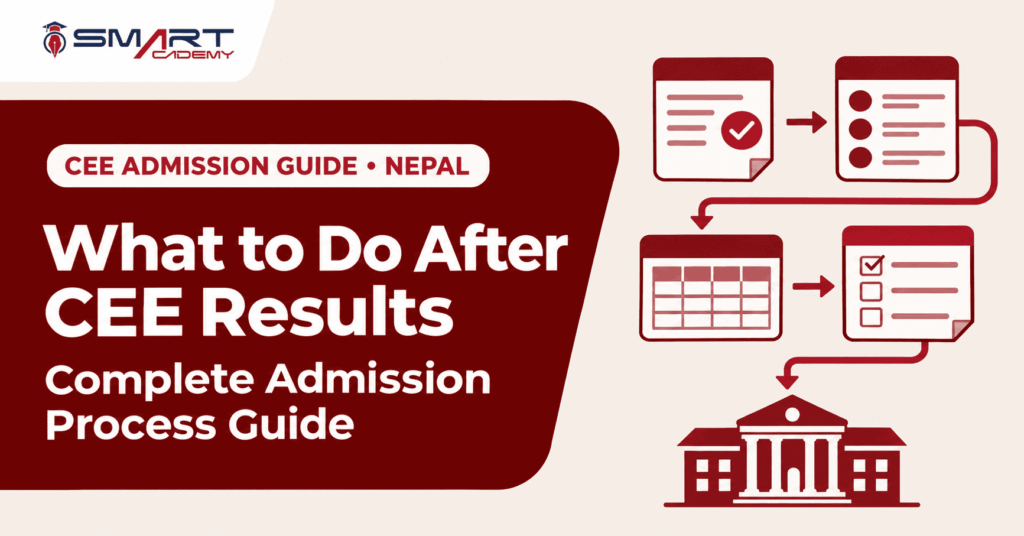

Passing the CEE does not automatically give you a college seat. It makes you eligible for the merit and admission process. Allocation depends on your merit position, applicable group, college-program priorities and available seats.
This is why priority setting deserves as much care as the examination itself. One rushed selection can leave you matched to a college you cannot afford or do not want to attend. Our CEE entrance preparation and admission guidance in Nepal helps you understand the complete pathway, but the Medical Education Commission (MEC) controls matching, deadlines and seat allocation.
MEC may adjust the portal, labels and schedule between cycles, so always follow the newest official notice.
What Is CEE Online Matching?
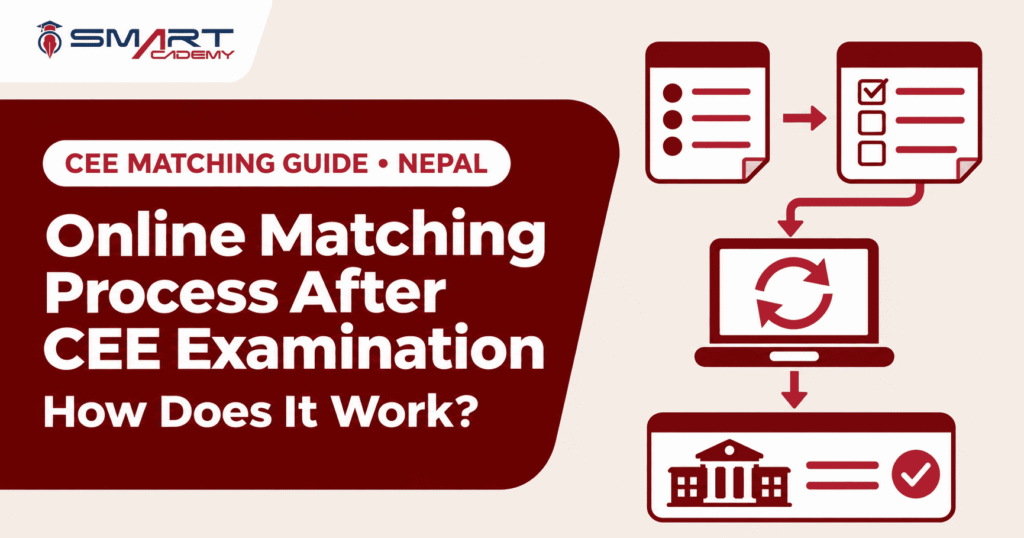
Online matching is the MEC process used to allocate eligible candidates to an educational institution and academic program. According to the MEC entrance and matching FAQ, the system considers:
- Your CEE merit order
- Your applicable group or reservation category
- The college-program priorities you submit
- The seats available in that round
The qualifying threshold is the 50th percentile, not 50% marks. Reaching it means you can be considered in the merit process; it does not mean you have secured admission, a scholarship or a paying seat.
Think of matching as a queue organized by merit. When your position is considered, the system checks your preferences in order and identifies the highest available, applicable choice. Arrange them by where you genuinely want to study—not by cutoff rumors.
What Happens Before Priority Setting?
After results, download your scorecard from the MEC entrance portal and record your marks, qualifying status and program-specific merit position. Then check the category-wise merit list and confirm that your group information is correct.
Next, study the seat matrix for your admission cycle. It shows how seats are distributed among institutions, programs and groups. Do not copy last year’s matrix because seat numbers and distributions may change.
Before building your priority list, compare:
- Scholarship and paying-seat availability
- Location, accommodation and travel requirements
- Teaching hospital or clinical exposure
- Official tuition and likely education costs
- Whether you would enroll if matched
Parents should be involved before priorities are submitted. A paying seat should appear on your list only when your family understands the likely total cost and is ready to meet the admission deadline.
How to Complete Online Priority Setting
MEC publishes a notice when priority setting opens. The notice will state who can participate, the relevant programs, the submission period and whether priorities are integrated or program-specific.
The exact portal interface can change, but the practical process usually follows these steps:
- Log in through the MEC entrance portal.
- Open priority setting for your MECEE-BL cycle.
- Review your eligible college-program combinations.
- Add only choices you would accept.
- Arrange them from your first preference downward.
- Save and review every entry.
- Make permitted changes before closing, then save again.
- Keep the final confirmation page.
Do not rely on an old article or screenshot for the permitted number of choices. That rule, the buttons and the submission workflow can change. The current MEC notice and portal instructions are the authority.
MEC’s FAQ also states that candidates who miss priority setting are eligible only for wrap-up matching. Treat the priority deadline as part of admission, not as an optional administrative task.
How the Computer-Based Matching Decision Is Made
Suppose your list starts with College A, then College B and College C. The system checks A first; if no applicable seat is available, it moves down your list.
A candidate below you in the relevant merit order cannot take an available seat from you simply because they listed it first. Merit remains the primary basis, while your priority order tells the system which available option you prefer.
However, group rules also matter. MEC applies group-wise merit order, reservation percentages and seat-conversion rules under the admission procedure. Your overall rank alone therefore cannot predict every result.
Scholarship, Paying, Matching and Rematching Rounds
The Medical Education Common Entrance Examination and Student Admission Procedure provides for two stages of scholarship or government-seat matching and two stages of paying or open matching. MEC may also publish rematching results when vacancies arise after an earlier allocation.
Scholarship matching commonly precedes paying matching, while foreign-category processes use separate notices. Take dates, round names and admission windows from the current schedule.
If matched, read the admission notice immediately. It identifies where to report, required documents, payment instructions and the deadline. Missing it can vacate the seat.
If you are not matched in the first result, do not assume the process is over. Continue monitoring official matching and rematching notices. Our guide for students who passed CEE but did not receive a seat explains the practical options without treating qualification as admission.
What Is Wrap-Up Matching?
Wrap-up matching is used to fill eligible vacancies remaining after the regular paying/open rounds. It is not simply another automatic result. MEC may require interested candidates to submit a separate online application and may conduct the process online or through physical presence, depending on the notice.
Eligibility depends on your earlier matching and admission status. Do not assume every unmatched, withdrawn or non-enrolled candidate is treated alike.
Monitor the official MEC notices, along with Smart Academy’s CEE exam schedule guide and MEC academic calendar guide. Where dates conflict, follow the newest MEC publication.
Mistakes That Can Cost You a Seat
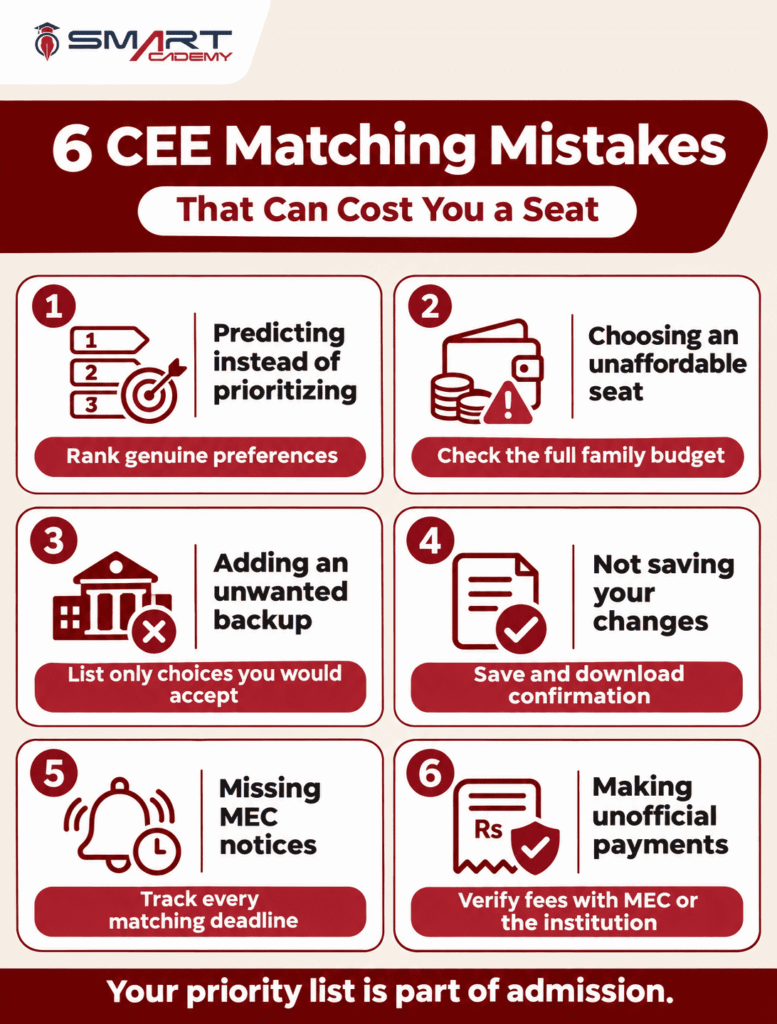
- Ranking by prediction instead of preference: Put colleges in the order you genuinely want them.
- Adding an unaffordable paying seat: A match is not useful if your family cannot complete admission.
- Including a college you would refuse: Do not treat unwanted choices as harmless backups.
- Forgetting to save after editing: Review the final confirmation, not only the screen you changed.
- Missing result and admission notices: Matching deadlines can be short and are part of the selection process.
- Paying someone unofficially to hold a seat: Verify fees through MEC and the relevant institution.
Final Checklist Before You Submit
Confirm your merit and category details, review the current seat matrix, ensure every choice is acceptable and check that paying options fit the family budget. Save the confirmation page and prepare your admission documents.
The matching system is easier to manage once you separate three ideas: qualifying makes you eligible, priority setting records your choices, and matching allocates an available seat according to merit and applicable rules.
If you want a second check before submitting your list, use the WhatsApp button on this page to share your merit position, preferred program and budget with our counselors.
Important: MEC rules, portal steps, seat matrices and schedules can change between cycles. This guide explains the general process; the newest MEC notice and your candidate portal always take precedence.