
Quick College Facts
| Field | Value |
|---|---|
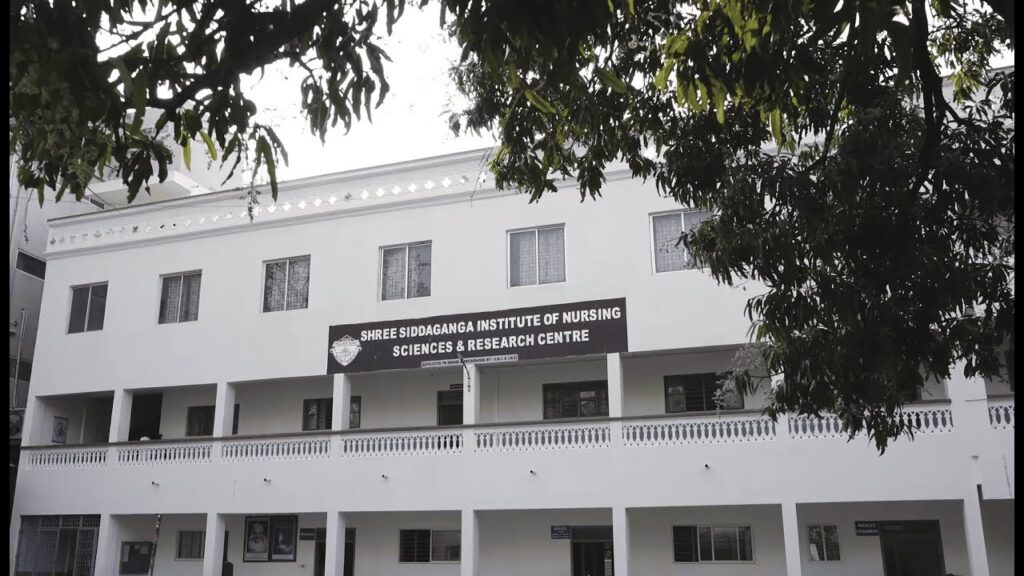
| College name | Sree Siddaganga Institute of Nursing Sciences and Research Centre (SINSRC) |
| Established | 1993 |
| Managed by | Sree Siddaganga Education Society (founded 1963), under Sree Siddaganga Math |
| Institute type | Private, self-financing |
| Affiliating university | Rajiv Gandhi University of Health Sciences (RGUHS), Bangalore |
| Approvals | Indian Nursing Council · Karnataka State Nursing Council · Government of Karnataka |
| Location | Shree Shivakumara Swamiji Road (B.H. Road), Tumakuru 572102, Karnataka |
| Courses | GNM · BSc Nursing · MSc Nursing |
| Teaching hospital | Siddaganga Multi Specialty Hospital, 800+ beds, linked to Siddaganga Medical College & Research Institute |
| Other clinical sites | Kyathsandra and Ramagondanahalli primary health centres · Anil Neuropsychiatry Hospital, Tumakuru · Cadabams Hospital, Bangalore |
| Hostel | Separate boys’ and girls’ hostels |
About Sree Siddaganga Institute of Nursing Sciences
The institute opened in 1993. It’s run by the Sree Siddaganga Education Society, founded in 1963 by Sree Sree Shivakumara Swamiji of the Sree Siddaganga Math, which runs more than 120 educational institutions across Karnataka.
The college is on B.H. Road in Tumakuru, a district city about 70 km north-west of Bangalore. Tumakuru is smaller, calmer and cheaper day to day than Bangalore, and it’s linked to Bangalore by national highway and rail.
For your training, the key fact is the hospital. The institute is attached to Siddaganga Multi Specialty Hospital, which it describes as an 800-plus-bed super-speciality hospital, alongside Siddaganga Medical College & Research Institute. The medical college lists 15 clinical departments, including emergency medicine, general surgery, obstetrics and gynaecology, paediatrics and psychiatry.
The institute teaches three programmes: the three-year GNM diploma, the four-year BSc and a two-year MSc in five specialities. If you’re comparing options across India, our Study in India guide sets out how the different routes work.
Is Sree Siddaganga Institute of Nursing Sciences recognised in Nepal?
Your qualification needs to be recognised in India and then in Nepal. Nepal’s side has one step you must take before you leave home.
In India. RGUHS awards the BSc and MSc degrees, and the Karnataka State Diploma in Nursing Examination Board examines the GNM diploma. The institute’s admissions page states approval by the Government of Karnataka and the Indian Nursing Council, and recognition by the Karnataka State Nursing Council. You or your parents can check its current status on the Indian Nursing Council’s website before you pay any fee.
In Nepal. You can’t practise as a nurse on a foreign qualification alone. You must register with the Nepal Nursing Council and pass its licensing examination. The council asks anyone who studied outside Nepal on or after 01/10/2020 to submit an eligibility letter from Nepal’s Medical Education Commission (MEC) with their licensing exam application, along with equivalence and evidence of the college’s recognition. Arrange the MEC letter before you pay fees or travel. Our guide to BSc Nursing in India for Nepali students explains it in more detail.
In India, after graduating. Indian Nursing Council guidance says foreign nationals, including Nepali citizens, who study nursing in India are not registered with an Indian State Nursing Registration Council for employment. Plan on using your qualification in Nepal or abroad.
Beyond Nepal. An INC-recognised BSc Nursing is the usual starting point for the UK, Gulf and US routes. Each has its own registration exam and English test.
Why choose Sree Siddaganga Institute of Nursing Sciences — and who it suits
Reasons you can check yourself:
- More than 30 years of nursing education, backed by an education society that dates from 1963.
- An 800-plus-bed hospital, plus a medical college with 15 clinical departments.
- Mental health and community postings beyond the campus, including Anil Neuropsychiatry Hospital in Tumakuru, Cadabams Hospital in Bangalore, and two village primary health centres.
- GNM for any +2 stream. If you studied commerce or humanities, you can still enter nursing through the GNM diploma.
It may not suit you if:
- You want big-city life. Tumakuru is a district city, much smaller than Bangalore.
- You’re nervous about the local language. Most patients in Tumakuru speak Kannada, and you’ll hear less English and Hindi than in Bangalore.
Courses and academics at Sree Siddaganga Institute of Nursing Sciences
| Course | Duration | Eligibility (as the institute publishes it) |
|---|---|---|
| GNM | 3 years | PUC or 10+2 in any stream (arts, commerce or science) · at least 40% · English · medically fit |
| BSc Nursing | 4 years (8 semesters) | 10+2 science with at least 45% in Physics, Chemistry and Biology combined · English compulsory · age 17 by 31 December |
| MSc Nursing | 2 years · 5 seats per speciality | BSc or Post Basic BSc Nursing with at least 55% · registered nurse and midwife · one year of experience |
MSc specialities: Medical-Surgical Nursing, Community Health Nursing, Paediatric Nursing, Psychiatric Nursing, and Obstetrics and Gynaecological Nursing.
The institute’s courses page says the Karnataka Common Entrance Test is compulsory for BSc admission; that route is for Karnataka candidates, and applicants from outside the state, including from Nepal, apply with a migration certificate and an eligibility certificate. We confirm the route for your intake. If GNM interests you, our page on GNM nursing in India explains how it compares with the BSc.
RGUHS sets the degree exams in English.
Sree Siddaganga Institute of Nursing Sciences fees for Nepali students — the full cost
The institute doesn’t publish its fees, and no reliable third-party figure exists. We won’t quote an estimate. The institute links a 2024 prospectus from its admissions page, and we get the current written fee schedule from the college before you commit, covering:
- tuition for each year
- hostel rent and mess charges
- one-time charges: admission fee, uniform, books, and university or board exam fees
- the full-programme total, converted to NPR at the fixed Nepal Rastra Bank rate of INR 1 = NPR 1.60
What is not included, even once fees are confirmed:
- Travel home, including the road or rail leg between Bangalore airport and Tumakuru
- Personal spending, medical insurance, and Nepal-side paperwork such as the MEC letter and attestation
For parents: living costs in Tumakuru are lower than in Bangalore, but build a full-programme budget before you leave. Nursing means classes, labs and hospital postings, so your son or daughter shouldn’t rely on part-time work.
Scholarships: the institute doesn’t publish any scholarship for international students. See our scholarship assistance service for what else may help.
Refunds depend on the case and the stage of admission. Ask our counsellors before you pay anything.
Clinical training, internship and where this degree takes you
Most of your ward hours are at Siddaganga Multi Specialty Hospital, which the institute describes as an 800-plus-bed super-speciality hospital, alongside Siddaganga Medical College & Research Institute. The institute’s field training page also lists:
- Kyathsandra and Ramagondanahalli primary health centres, for community nursing
- Anil Neuropsychiatry Hospital, Tumakuru, for mental health nursing
- Cadabams Hospital, Bangalore, for psychiatric care
The BSc ends with a supervised internship, as required for every INC-recognised BSc Nursing. The institute also has a placement cell with an agreement with the Magic Bus India Foundation.
Where the degree takes you. The institute doesn’t publish verified placement data, so we don’t quote a placement rate. These are the routes:
- Nepal: register with the Nepal Nursing Council after passing its licensing exam.
- India: INC guidance says foreign nationals aren’t registered with Indian State Nursing Councils for employment.
- Abroad: the UK, Gulf and US routes start from an INC-recognised degree, plus that country’s own exam and English test.
Hostel, safety and campus facilities
Your parents will want to know where you sleep. The institute lists a hostel and transport among its facilities, and published listings describe separate boys’ and girls’ hostels with a mess, plus a health centre, cafeteria and sports facilities. Hostel fees and rules aren’t published, so before you pay we confirm the room sharing, warden arrangements, gate timings and charges in writing.
Campus facilities (facilities page)
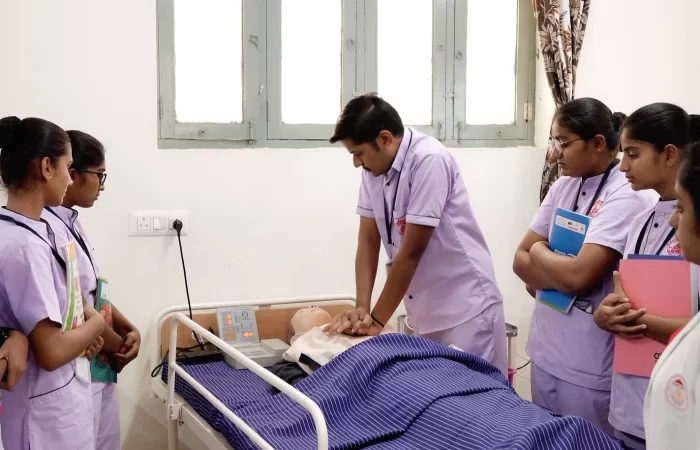
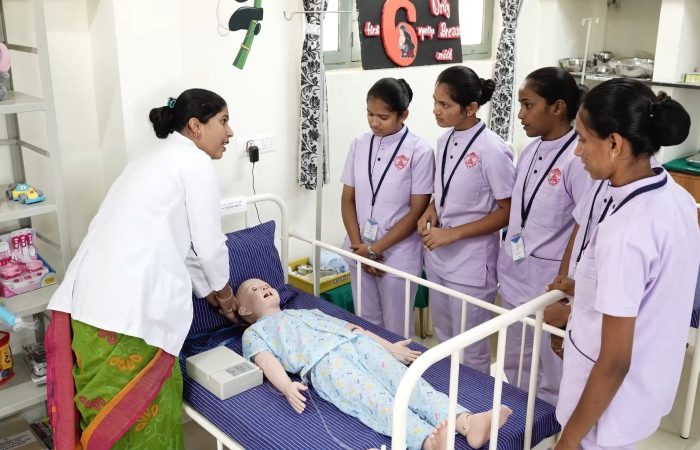
- Eight laboratories: clinical skills, pre-clinical science, audio-visual aids, child health, community health, nursing foundation and advanced nursing, nutrition, and obstetrics and gynaecology
- Smart classrooms and a library
- Auditorium
- Transport
Admission for Nepali students — eligibility, documents and steps
Eligibility
For BSc Nursing, you need:
- 10+2 science with Physics, Chemistry, Biology and English
- At least 45% in Physics, Chemistry and Biology combined
- Age 17 by 31 December of your joining year
- Medical fitness
For GNM, you need +2 in any stream with English and at least 40%. For the MSc, you need a BSc or Post Basic BSc Nursing with at least 55%, one year of experience and Nepal Nursing Council registration.
IELTS or PTE: not required. Neither the institute nor the INC lists an English test for admission.
Documents you will need
- SEE certificate and marksheet
- NEB +2 transcript, marksheet, provisional certificate and migration certificate
- Character certificate from your +2 school
- Citizenship certificate and passport
- Recent passport-size photographs
- Medical fitness certificate
- Eligibility certificate: for the BSc and MSc, RGUHS issues it to foreign nationals with a letter of introduction from your embassy and AIU equivalence of your NEB +2
- MEC eligibility letter from Nepal
Our documentation guidance service covers each of these.
How to apply from Nepal
- Send us your NEB marksheet on WhatsApp. We tell you whether GNM or BSc fits your marks and stream.
- Nepal-side check. We confirm your MEC eligibility letter route before you commit money.
- Document review. Our counsellors review every document.
- Application. We apply directly to the institute for you.
- Offer and fees. The institute confirms your seat and fee schedule, and you pay the first instalment.
- Eligibility and equivalence are processed.
- Travel and reporting. You travel to Tumakuru, move into the hostel and register.
Getting to Tumakuru from Nepal — and life once you are there
Fly to Bangalore, then travel on to Tumakuru. Nepal Airlines flies non-stop from Kathmandu to Kempegowda International Airport, Bangalore, in about 3 hours 25 minutes, and Air India Express lists a non-stop service from June 1, 2025. Other routes connect through Delhi or Kolkata. Check schedules before you book. From Bangalore, Tumakuru is about 70 km by national highway, and trains run from Bangalore to Tumakuru station.
Documents to travel. Nepali citizens don’t need a visa to study in India. Travel on your passport. The Embassy of Nepal in New Delhi lists either the passport or the citizenship certificate as valid for air travel to India, but at least one airline accepts only a passport or voter ID from adults.
Daily life. Kannada is the everyday language in Tumakuru, and you’ll need working phrases for patient care early. Get an Indian SIM card in your first week.
This page provides general information based on our experience supporting students and on published requirements at the time of writing. Immigration rules change frequently and every application is assessed individually. It is not immigration advice. Always confirm current requirements with the relevant embassy or a licensed adviser before acting.
How Smart Academy guides you to Sree Siddaganga Institute of Nursing Sciences
A college in a smaller city means one extra leg on every journey, and your parents will want to know who is responsible at each step.
- Before you apply: we check your NEB marks and stream, and help you choose between GNM and BSc.
- Documents: our counsellors review everything before submission, including the eligibility papers.
- Application: we apply directly to the institute and follow it through to your offer.
- Fees: you get the institute’s written fee schedule, and you pay only against an official invoice.
- Travel: we plan the flight and the onward trip from Bangalore to Tumakuru.
- Once you’re there: we have an office in India as well as in Nepal.
Before you plan around these figures
Indian colleges may revise their fees, hostel charges and admission rules for international students every year, and some make changes after the intake has opened. Everything on this page reflects the college’s published information at the time we last checked it. Use it to plan, not as a quote. The only figures your family should budget around are the ones the college gives you in writing.
Fees may be revised every year. Tuition, admission, university and exam fees are set for each academic year and can change after they are published.
Your fee may differ from the published fee. Some colleges charge international students a different amount from Indian applicants. Ask which fee applies to a Nepali citizen, in writing.
Tuition is not the total cost. Hostel, mess, uniform, books, laboratory charges, caution deposits and travel are usually billed separately.
Scholarships are not awarded automatically. Many are limited to Indian nationals or state residents. Verify this from the official source.
Rupee amounts are estimates. Nepali rupee figures are converted from Indian rupees. What you actually pay depends on the day’s exchange rate and bank charges.
Courses, seats and dates can change. Seats for international students, deadlines, eligibility rules, hostel arrangements and clinical postings are set each year.
Recognition needs checking on both sides. Confirm the college’s current approval in India, such as from the Indian Nursing Council or the National Medical Commission, and your eligibility to register in Nepal before you pay.
Refunds follow the college’s rules. Any refund is decided by the college under its own policy, so read the terms in your admission letter before you pay.
Before your family pays anything
- Get the college’s current fee structure and admission letter in writing, including hostel, mess and one-time charges.
- Confirm the college’s approval status in India and your eligibility to register in Nepal when you return.
- Pay only against an official fee demand from the college, and keep every receipt.
When you apply through us, we request the college’s current fee letter for you and go through every line with you and your parents in Nepali rupees before any payment is made.
We are an independent education consultancy, not part of this college. The college and its affiliating university set fees, admission criteria and policies, and make every admission decision. This notice is general information, not a fee quote, an offer of admission or immigration advice. Where anything here differs from what the college confirms to you in writing, the college’s written information applies.
Frequently asked questions
Is a qualification from Sree Siddaganga valid in Nepal?
RGUHS awards the BSc and MSc, and the institute states approval by the Indian Nursing Council and recognition by the Karnataka State Nursing Council. To work in Nepal, you register with the Nepal Nursing Council after passing its licensing exam, with an eligibility letter from Nepal’s Medical Education Commission.
Can I study GNM if I didn’t take science at +2?
Yes. The institute accepts PUC or +2 in arts, commerce or science for GNM, with at least 40% and English. The BSc needs science with Physics, Chemistry and Biology.
What NEB marks do I need for BSc Nursing?
You need 10+2 science with English and at least 45% in Physics, Chemistry and Biology combined, and you must be 17 by 31 December of your joining year. Send us your marksheet on WhatsApp and we’ll check it.
Do I need to sit the Karnataka entrance test?
The institute says the Karnataka Common Entrance Test is compulsory for BSc admission, which applies to Karnataka candidates. Applicants from outside the state apply with a migration certificate and an eligibility certificate. We confirm the route for your intake before you apply.
How much does it cost?
The institute doesn’t publish its fees, so we don’t quote one. We get the written schedule for tuition, hostel, mess and one-time charges, converted to NPR at INR 1 = NPR 1.60, before you pay anything.
Where will I do my clinical training?
Mainly at Siddaganga Multi Specialty Hospital, an 800-plus-bed hospital linked to Siddaganga Medical College. You also train at two village health centres, a neuropsychiatry hospital in Tumakuru and Cadabams Hospital in Bangalore.
Is there a girls’ hostel?
Published listings describe separate boys’ and girls’ hostels with a mess. Hostel fees and rules aren’t published, so we confirm room sharing, warden arrangements and charges in writing before you pay.
Will I need to speak Kannada?
Teaching is in English, but most patients in Tumakuru speak Kannada. You’ll need working phrases in your first clinical year. It’s the hardest adjustment for most students here, so start early.
Do I need IELTS or PTE?
No. Neither the institute nor the Indian Nursing Council lists an English test for admission. You’ll only need IELTS, OET or a similar test later if you register as a nurse in the UK, the Gulf or another English-speaking country.
How do I get from Kathmandu to Tumakuru?
Fly to Bangalore. Nepal Airlines runs a non-stop flight of about 3 hours 25 minutes. From Bangalore, Tumakuru is about 70 km by highway, and trains run to Tumakuru station.
Do I need a visa to study in India from Nepal?
No. Nepali citizens don’t need a visa to study in India. Travel on your passport. The Embassy of Nepal also lists the citizenship certificate for air travel, but some airlines accept only a passport or voter ID from adults.