
Quick College Facts
| Field | Value |
|---|---|
| College name | Maharishi Markandeshwar College of Nursing |
| University | Maharishi Markandeshwar (Deemed to be University), Mullana — deemed university under Section 3 of the UGC Act since 2007 |
| Managed by | Maharishi Markandeshwar Trust (founded 1993) |
| Institute type | Private deemed university |
| University grade | NAAC A++ (2021) |
| Nursing approval | Indian Nursing Council |
| Location | NH-44, Ambala–Yamunanagar Highway, Mullana, Ambala, Haryana 133207 |
| Courses | BSc Nursing · Post Basic BSc Nursing · MSc Nursing · PhD |
| Seats | BSc 100 · Post Basic BSc 30 · MSc 30 (6 in each of 5 specialities) |
| Teaching hospital | MM Institute of Medical Sciences & Research hospital, 1,140 beds, on campus |
| Hostel | 16 hostels on campus; on-campus stay is compulsory for international students |
| Application fee | US$35 for foreign applicants (INR 1,200 for Indian applicants) |
About Maharishi Markandeshwar College of Nursing
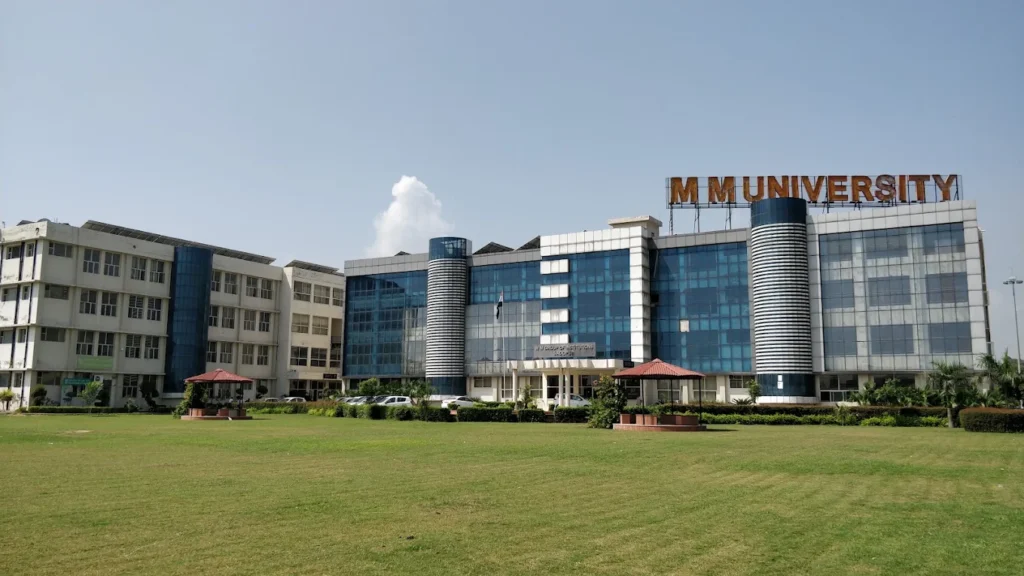
Maharishi Markandeshwar College of Nursing is one of the nursing units of Maharishi Markandeshwar (Deemed to be University), usually called MMU, at Mullana in Ambala district, Haryana. The Maharishi Markandeshwar Trust was set up in 1993, and the university received deemed status in 2007. It holds an A++ grade from the National Assessment and Accreditation Council (2021).
The campus is on the Ambala–Yamunanagar highway (NH-44), in a small town setting. Ambala Cantonment railway station is about 23 km away and Yamunanagar about 29 km. Chandigarh airport is about 62 km away, and Delhi’s international airport about 225 km.
MMU runs three nursing units at Mullana. The College of Nursing is co-educational. The MM Institute of Nursing teaches the BSc to women, and the MM School of Nursing teaches the GNM diploma to women. We help you choose the unit that fits your course and circumstances.
Because MMU is a deemed university, it awards its own degrees rather than relying on an affiliating state university. The campus also includes a medical college and its 1,140-bed hospital, where you do your clinical training.
Is MM College of Nursing recognised in Nepal?
Your qualification needs to be recognised in India and then in Nepal. Nepal’s side has one step you must take before you leave home.
In India. MMU awards the degree as a deemed university recognised under Section 3 of the UGC Act, and its nursing programmes carry Indian Nursing Council approval. You or your parents can check the college’s current status on the INC’s list of recognised institutions at indiannursingcouncil.org before you pay any fee.
In Nepal. You can’t practise as a nurse on a foreign qualification alone. You must register with the Nepal Nursing Council (NNC) and pass its licensing examination. The NNC asks anyone who studied outside Nepal on or after 01/10/2020 to submit an eligibility letter from Nepal’s Medical Education Commission (MEC) with their licensing exam application, along with equivalence and evidence of the college’s recognition. Arrange the MEC letter before you pay fees or travel.
In India, after graduating. Indian Nursing Council guidance says foreign nationals, including Nepali citizens, who study nursing in India are not registered with an Indian State Nursing Registration Council for employment. Plan on using your degree in Nepal or abroad.
Beyond Nepal. An INC-recognised BSc Nursing is the usual starting point for the UK, Gulf and US routes. Each has its own registration exam and English test.
Why choose MM College of Nursing — and who it suits
Reasons you can check yourself:
- A deemed university with a NAAC A++ grade. MMU awards your degree directly, and its A++ grade is listed on the NAAC site.
- A 1,140-bed hospital on campus, so your clinical hours happen where you live and study.
- Hindi is the local language. Most Nepali students already understand Hindi, so talking to patients is easier than in a Kannada-speaking state.
- Closer to home than the south. Mullana is reachable through Delhi or Chandigarh, and the university’s international brochure confirms that Nepali students don’t need a student visa.
It may not suit you if:
- You want a big-city life. Mullana is a small town; the nearest cities are Ambala, Yamunanagar and Chandigarh.
- You find heat or cold hard. Haryana has very hot summers and cold winters.
- You’d rather live off campus. The university requires international students to stay in its hostels.

Courses and academics at MM College of Nursing
| Course | Duration | Seats | Eligibility (as the university publishes it) |
|---|---|---|---|
| BSc Nursing | 4 years | 100 | 10+2 with Physics, Chemistry, Biology and English · at least 45% · age 17 by 31 December |
| Post Basic BSc Nursing | 2 years | 30 | GNM · registered nurse and midwife |
| MSc Nursing | 2 years | 30 | BSc or Post Basic BSc Nursing · at least 55% · one year of experience · registered nurse |
| PhD Nursing | — | — | MSc Nursing |
MSc specialities (6 seats each): Medical-Surgical Nursing, Community Health Nursing, Paediatric Nursing, Psychiatric Nursing, and Obstetrics and Gynaecological Nursing.
For the Post Basic BSc and MSc, your nurse registration would be with the Nepal Nursing Council. Teaching is in English, and MMU conducts its own exams.
Other health sciences at MMU. The university also teaches physiotherapy (a four-and-a-half-year BPT) and a range of paramedical BSc courses. Ask us if one suits you better than nursing.
MM College of Nursing fees for Nepali students — the full cost
MMU’s published figures and third-party listings don’t agree, and some apply only to Indian students. We won’t quote an estimate.
Before you commit, we get the university’s written fee schedule for a Nepali applicant, covering:
- tuition for each year
- hostel and mess charges (compulsory on campus for international students)
- one-time charges and exam fees
- the full-programme total, converted to NPR at the fixed Nepal Rastra Bank rate of INR 1 = NPR 1.60
Application fee: US$35 for foreign applicants.
Scholarships: the university’s international admissions page advertises merit scholarships of up to 50%. Whether you qualify depends on your marks and the year’s rules, so we confirm it in writing with your offer.
What is not included:
- Travel home through Delhi or Chandigarh, especially at Dashain and Tihar, when fares are highest
- Uniforms, books and personal spending
- Medical insurance, and Nepal-side paperwork such as the MEC letter and attestation
For parents: build a full-programme budget before you leave. Nursing means classes, labs and hospital postings, so your son or daughter shouldn’t rely on part-time work to pay for tuition or living costs.
Refunds depend on the case and the stage of admission. Ask our counsellors before you pay anything.
Clinical training, internship and where this degree takes you
Your clinical training is at the university’s 1,140-bed teaching hospital on the Mullana campus, run with MM Institute of Medical Sciences & Research. Postings cover medicine, surgery, paediatrics, obstetrics and gynaecology, psychiatry and community health. The BSc ends with a supervised internship, as required for every INC-recognised BSc Nursing.
Where the degree takes you. The college doesn’t publish verified placement data for nursing, so we don’t quote a placement rate. These are the routes:
- Nepal: register with the Nepal Nursing Council after passing its licensing exam.
- India: INC guidance says foreign nationals aren’t registered with Indian State Nursing Councils for employment.
- Abroad: the UK, Gulf and US routes start from an INC-recognised degree, plus that country’s own exam and English test.
Hostel, safety and campus facilities
Your parents will want to know where you live. MMU has 16 hostels on campus, with air-conditioned rooms and attached washrooms, and it requires international students to live on campus. That means you’re never far from classes or the hospital, and someone is always responsible for you after hours. Before you pay, we confirm room sharing, the mess and hostel charges in writing.
Campus facilities
- Medical college and 1,140-bed hospital on campus
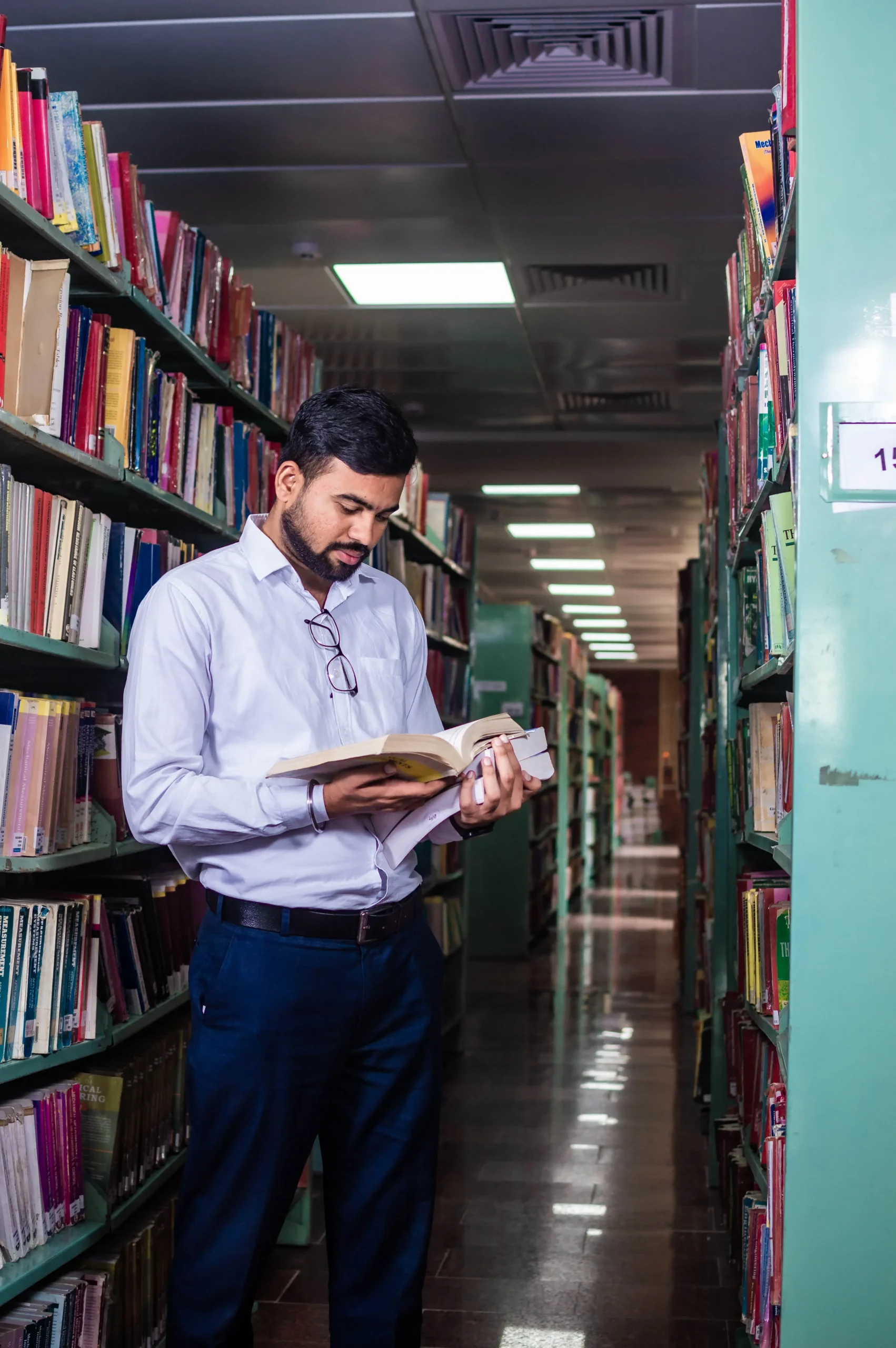
- Nursing skills laboratories and library
- Physiotherapy and allied health departments on the same campus
Admission for Nepali students — eligibility, documents and steps
Eligibility
For BSc Nursing, you need:
- 10+2 with Physics, Chemistry, Biology and English
- At least 45%
- Age 17 by 31 December of your joining year
- Medical fitness
For the MSc, you need a BSc or Post Basic BSc Nursing with at least 55%, one year of experience and Nepal Nursing Council registration.
Selection: the university sets its selection process for international applicants each year. We confirm it for your intake before you apply.
IELTS or PTE: not required for admission. Teaching is in English.
Documents you will need
- SEE certificate and marksheet
- NEB +2 transcript, marksheet, provisional certificate and migration certificate
- Character certificate from your +2 school
- Citizenship certificate and passport
- Recent passport-size photographs
- Medical fitness certificate
- Equivalence of your NEB +2, as the university requires
- MEC eligibility letter from Nepal
How to apply from Nepal
- Send us your NEB marksheet on WhatsApp. We check it against the 45% rule for PCB and English.
- Nepal-side check. We confirm your MEC eligibility letter route before you commit money.
- Document review. Our counsellors review every document.
- Application. We submit your application, with the US$35 fee, to the university.
- Offer and fees. The university confirms your seat and fee schedule, and you pay the first instalment.
- Travel and reporting. You travel to Mullana, move into the hostel and complete registration.
Getting to Mullana from Nepal — and life once you are there
By air, through Delhi or Chandigarh. Several airlines fly non-stop from Kathmandu to Delhi. From Delhi airport, Mullana is about 225 km by road, or you can take a train to Ambala Cantonment, about 23 km from campus. Chandigarh airport, about 62 km away, is closer if you connect there. Check schedules before you book.
Overland. You can cross at a border point such as Bhairahawa–Sunauli or Mahendranagar–Banbasa and continue by train or bus. It costs less, but the journey is long.
Documents to travel. Nepali citizens don’t need a visa to study in India, and MMU’s international brochure notes that its student-visa requirement doesn’t apply to Nepali students. Travel on your passport. The Embassy of Nepal in New Delhi lists either the passport or the citizenship certificate as valid for air travel to India, but at least one airline accepts only a passport or voter ID from adults.
Daily life. Hindi and Punjabi are spoken locally, and most Nepali students find Hindi easy to pick up for patient care. Summers are very hot and winters cold, so pack for both. Get an Indian SIM card in your first week.
This page provides general information based on our experience supporting students and on published requirements at the time of writing. Immigration rules change frequently and every application is assessed individually. It is not immigration advice. Always confirm current requirements with the relevant embassy or a licensed adviser before acting.
How Smart Academy guides you to MM College of Nursing
A deemed university has its own admission rules for international students, and your parents will want to know who is handling each step.
- Before you apply: we check your NEB marks and your Nepal-side eligibility, and help you choose the right nursing unit.
- Documents: our counsellors review everything before submission.
- Application: we apply directly to the university and follow it through to your offer.
- Fees: you get the written fee schedule, including hostel and any scholarship, and you pay only against an official invoice.
- Travel: we plan the route through Delhi or Chandigarh.
- Once you’re there: we have an office in India as well as in Nepal.
Before you plan around these figures
Indian colleges may revise their fees, hostel charges and admission rules for international students every year, and some make changes after the intake has opened. Everything on this page reflects the college’s published information at the time we last checked it. Use it to plan, not as a quote. The only figures your family should budget around are the ones the college gives you in writing.
Fees may be revised every year. Tuition, admission, university and exam fees are set for each academic year and can change after they are published.
Your fee may differ from the published fee. Some colleges charge international students a different amount from Indian applicants. Ask which fee applies to a Nepali citizen, in writing.
Tuition is not the total cost. Hostel, mess, uniform, books, laboratory charges, caution deposits and travel are usually billed separately.
Scholarships are not awarded automatically. Many are limited to Indian nationals or state residents. Verify this from the official source.
Rupee amounts are estimates. Nepali rupee figures are converted from Indian rupees. What you actually pay depends on the day’s exchange rate and bank charges.
Courses, seats and dates can change. Seats for international students, deadlines, eligibility rules, hostel arrangements and clinical postings are set each year.
Recognition needs checking on both sides. Confirm the college’s current approval in India, such as from the Indian Nursing Council or the National Medical Commission, and your eligibility to register in Nepal before you pay.
Refunds follow the college’s rules. Any refund is decided by the college under its own policy, so read the terms in your admission letter before you pay.
Before your family pays anything
- Get the college’s current fee structure and admission letter in writing, including hostel, mess and one-time charges.
- Confirm the college’s approval status in India and your eligibility to register in Nepal when you return.
- Pay only against an official fee demand from the college, and keep every receipt.
When you apply through us, we request the college’s current fee letter for you and go through every line with you and your parents in Nepali rupees before any payment is made.
We are an independent education consultancy, not part of this college. The college and its affiliating university set fees, admission criteria and policies, and make every admission decision. This notice is general information, not a fee quote, an offer of admission or immigration advice. Where anything here differs from what the college confirms to you in writing, the college’s written information applies.
Frequently asked questions
Is the BSc Nursing from MMU Mullana valid in Nepal?
MMU is a deemed university under the UGC Act, and its nursing programmes are approved by the Indian Nursing Council. To work in Nepal, you register with the Nepal Nursing Council after passing its licensing exam. You’ll also need an eligibility letter from Nepal’s Medical Education Commission, so arrange it before you leave.
What does “deemed university” mean for me?
It means MMU awards your degree itself instead of through an affiliating state university. It’s recognised under Section 3 of the UGC Act and holds a NAAC A++ grade. For Nepal, what matters most is INC approval and the MEC letter.
What NEB marks do I need for BSc Nursing?
You need 10+2 with Physics, Chemistry, Biology and English and at least 45%, and you must be 17 by 31 December of your joining year. Send us your marksheet on WhatsApp and we’ll check it against the university’s current rule.
How much does it cost?
Published figures conflict, and some apply only to Indian students, so we don’t quote one. We get the written schedule for a Nepali applicant, including the compulsory hostel, converted to NPR at INR 1 = NPR 1.60. The application fee is US$35.
Are there scholarships for Nepali students?
MMU’s international page advertises merit scholarships of up to 50%. Whether you qualify depends on your marks and that year’s rules, so we confirm any scholarship in writing with your offer rather than promising it in advance.
Do I have to live in the hostel?
Yes. MMU requires international students to live on campus. There are 16 hostels with air-conditioned rooms and attached washrooms, close to classes and the 1,140-bed hospital, which most parents find reassuring.
Is the college only for women?
No. The MM College of Nursing is co-educational. MMU’s MM Institute of Nursing and its GNM school admit women only. We help you apply to the unit that suits you.
Will I need to speak Hindi?
Teaching is in English, but patients mostly speak Hindi or Punjabi. Most Nepali students already understand Hindi, so this is usually easier than studying in south India, where patients speak Kannada.
How do I get from Kathmandu to Mullana?
Fly to Delhi, then travel about 225 km by road or by train to Ambala Cantonment, 23 km from campus. Chandigarh airport, about 62 km away, is closer if you connect there. Overland routes through Sunauli or Banbasa cost less but take longer.
Do I need a visa to study in India from Nepal?
No. Nepali citizens don’t need a visa to study in India, and MMU’s brochure confirms its student-visa rule doesn’t apply to Nepali students. Travel on your passport, as some airlines accept only a passport or voter ID from adults.